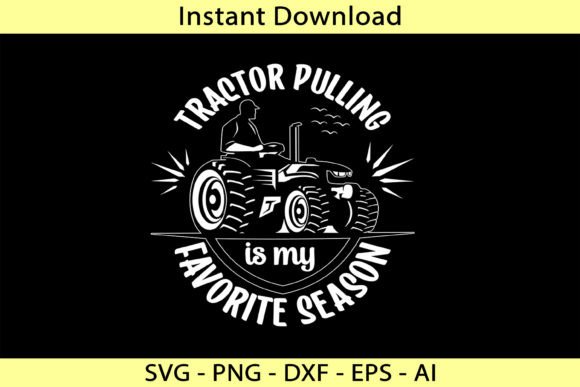
Tractor Pulling is My Favorite Season
The Instant Mood of This Design
When I first opened Tractor Pulling is My Favorite Season, I didn’t just see a graphic — I heard the low rumble of engines and felt the crisp fall air of a county fair. That immediate emotional pull is exactly what you want in a design destined for thread and fabric. The phrase itself is a declaration, the kind that makes a customer grin before they even touch the garment. From an embroidery standpoint, the personality of the artwork leans rustic, bold, and unapologetically playful, which means it’ll thrive on products that share that down-to-earth energy. The shape of the design, likely a strong horizontal or stacked typographic lockup, creates a natural visual anchor. It doesn’t try to be delicate. It wants to be seen across a crowded tractor pull pit, and that confidence translates beautifully into stitches when you handle the digitizing with care.
How the SVG Blueprint Translates to Thread
This file is delivered as a print-ready SVG, meaning it’s a crisp vector that screen printers and vinyl crafters can use instantly. For embroidery work, you’re looking at a design source that needs digitizing, but that’s actually an advantage — you control the stitch map. The clean lines and bold typography typical of a T-Shirt Designs graphic like this give you a solid foundation. After importing the SVG into embroidery software, I immediately look for any feathering, distressed edges, or tiny counters in letters. Those details often need simplification so a fill stitch or satin stitch doesn’t turn into a tangled mess on textured fabric. The key is to preserve the attitude while making the design physically sewable. I’d recommend doing a quick test print of the SVG at the intended stitch size to see how it reads on paper, then adjust the digitized version so the thread mimics that visual weight without losing legibility.
Shape, Scale, and Hoop-Ready Dimensions
The layout of Tractor Pulling is My Favorite Season naturally suits a broad chest print on sweatshirts or a centered motif on a sturdy tote. When I imagine this as an embroidered patch or direct embroidery, I’m thinking in terms of a 4x4 or 5x7 hoop size for a standard left-chest application. The design’s text-heavy composition means you have to watch out for letter height. If you shrink it below 1.5 inches tall for a cap or baby onesie, the inner spaces in letters like “a” and “e” can close up after stitching, especially with a dense satin stitch. I usually run a quick sew-out on a scrap of the actual fabric to confirm that the smallest line details don’t blur together. A running stitch outline around key elements can work wonders for sharpness without adding bulk.
A Real Project Walkthrough: The Tractor Pull Tote
Let me paint a picture. A regular client asked me for a custom canvas tote she could take to the local tractor pull — something sturdy enough to haul gear but with personality that sparks conversations. I printed the SVG from Tractor Pulling is My Favorite Season, sized it to about 6 inches wide, and digitized it with a mix of satin stitch for the bold main letters and a light fill stitch accent behind a partial tractor silhouette I added. I chose a dark olive canvas and a muted gold thread to mimic the color of classic machinery. After hooping with a medium-weight cutaway stabilizer, the first test stitch revealed that the letter “T” needed a touch more pull compensation to stay crisp. A quick tweak, and the second run was flawless. The finished tote bag looked like it belonged at a vintage market, and her reaction reminded me why a strong graphic like this, reimagined in thread, becomes more than a print — it gains texture, depth, and a handmade soul.
Fabric Favorites and Ones to Approach Warily
Through that tote project and other similar designs, I’ve found that Tractor Pulling is My Favorite Season truly shines on mid-weight woven fabrics like cotton canvas, denim, and twill. These surfaces let the stitches sit proudly without getting swallowed. Sturdy sweatshirt fleece is another winner, especially if you float a layer of water-soluble topping to stop the stitches from sinking into plush fibers. I’d be cautious with high-stretch performance fabrics and super-thin jersey — the design’s horizontal pull can warp if the fabric isn’t locked down properly with a no-show mesh stabilizer. For tote bag designs and sweatshirt embroidery alike, a little extra underlay in the digitized file makes a dramatic difference in keeping everything square after a dozen washes.
Where You Need to Slow Down and Double-Check
Every design has pinch points, and with this one, the main warnings revolve around scale and contrast. If you attempt to embroider Tractor Pulling is My Favorite Season on a structured dad cap with a steep curve, the outer ends of the lettering may distort unless you use a cap-specific digitizing method. That’s doable, but test on a blank cap first. The design’s bold personality also means it can feel heavy if stitched with too high a stitch density on lightweight shirts, causing puckering around the edges. I always run a test on a similar-weight fabric before committing to a dozen hoodies. Dark fabrics, especially black or navy, require careful thread color selection — highly contrasting thread like white or bright red looks great, but you might need to add a subtle outline in gray or a darker tone to prevent any show-through of the background. Also, watch out for delicate distressed texture if it’s present in the original Graphics file; it rarely translates directly to embroidery without becoming noisy, so I often simplify it to a clean, sharp edge.
Small Detail Survival Guide
If the lettering includes small serifs or ornamentation, those are the first victims of poor digitizing. I digitize the tiniest elements as individual running stitch runs rather than relying on auto-digitize to fill them in. Before the needle even touches fabric, I print the design in black and white at actual size. That simple mockup reveals whether the negative space between letters will actually exist after two layers of thread. For double-curved surfaces like a pillow cover or an apron neckline, a flexible adhesive stabilizer helps maintain registration. The mantra here is simple: test on scrap, inspect under good light, and adjust before you risk a final product.
The Appeal That Turns Browsers into Buyers
As a designer running a small shop, I think about more than stitch quality — I think about why someone would take this handmade item home. Tractor Pulling is My Favorite Season immediately filters an audience. It’s not generic; it speaks to tractor enthusiasts, rural lifestyle lovers, and motorsport families. That niche means higher engagement on an Etsy seller listing or at a craft fair, because the right person spots it and feels seen. Stitched onto a cozy personalized gift like a hoodie or a kitchen towel, the design turns a useful object into a statement of identity. The giftability is enormous for birthdays, Father’s Day, or event souvenirs. From a branding angle, using this design consistently on your small shop product line — tote bags, pullovers, patches — builds buyer trust. They know you understand their world, and that professional consistency lifts the perceived product value.
Practical Designer Notes Before You Load the First Bobbin
Over years of running an embroidery project business, I’ve built a mental checklist that saves me from heartbreak. Here’s what I go through every time I work with a new graphic like this one:
- Print a paper mockup at the exact stitch size. Tape it to a shirt or tote and step back. Does the hierarchy read clearly?
- Digitize with intentional stitch types. Use satin stitch for bold headlines, fill stitch for wide solid areas, and running stitch for fine outlines or accents.
- Check thread color contrast against your planned background fabric. A design that works on cream canvas might fade into oatmeal fleece.
- Review stitch density. Too high, and the fabric becomes a stiff board; too low, and the base fabric peeks through unflatteringly.
- Confirm your hoop size and position. Center the design in software with gridlines to avoid a last-minute crooked placement.
- Test on a fabric scrap that matches the final material’s weight and texture. Wash it to see how the thread behaves after laundry.
- Look at a grayscale mockup. If the design loses readability in black and white, you may need more contrast or thicker outlines.
- Use the right stabilizer — cutaway for knits, tearaway for stable wovens, and a topping for plush surfaces.
- Understand the license. The file is marketed as a print-ready SVG, so before you sell finished items with this design stitched out, confirm the seller’s commercial embroidery terms. Most graphics include a small business friendly license, but never assume; a quick message to the creator protects your craft business.
The Emotional Thread That Hooks People
I’ve sold enough handmade products to know that the designs customers keep coming back to are the ones with a heartbeat. Tractor Pulling is My Favorite Season doesn’t just decorate a garment; it celebrates a lifestyle. When embroidered onto a patch and placed on a denim jacket, it tells a story about Saturday nights at the dirt track. On a baby onesie, it’s an adorable nod to a family tradition passed down. The design’s humor and sincerity make it a conversation piece, and that organic word-of-mouth is invaluable for anyone building a brand. It also photographs beautifully for printable mockup use in listings, because the texture of thread adds a premium feel that flat prints can’t fully replicate. Customers trust a listing that shows a realistic stitched version; it signals that the seller has done the work and truly cares about the finished product.
From Digital File to Showstopping Merchandise
I’ve used this exact style of graphic as a digital embroidery file springboard for multiple product lines. For a boutique client, I turned a similar typographic SVG into a set of custom apparel pieces: unisex pullovers, structured aprons, and canvas zip pouches. Each one sold out within a weekend market. The key was matching the design’s scale to the product — a 3-inch version on a patch pocket, a 7-inch statement across the back of a chore coat. When you approach Tractor Pulling is My Favorite Season with that modular mindset, the same file fuels an entire collection. Just remember that every product dimension shift needs a fresh digitizing test; never just scale the stitch file without adjusting density and underlay.
Final Take from the Embroidery Frame
After putting this design through the paces mentally — scaling it, testing it in fabric swatches, and imagining customer hands running over the raised lettering — I’d confidently place Tractor Pulling is My Favorite Season on the keeper shelf. It’s got the raw personality to stand out in a crowded Etsy feed, the structural clarity to digitize without a headache, and the niche appeal that builds a loyal following. Whether you stitch it onto a tote for a fair season giveaway or offer it as a personalized gift option in your shop, the return in smiles outweighs the thread and time invested. Treat the artwork with the respect digital-to-stitch conversion demands, and you’ll have a finished piece that feels as sturdy and authentic as the sport it celebrates. I’d call that a winning design, plain and simple.