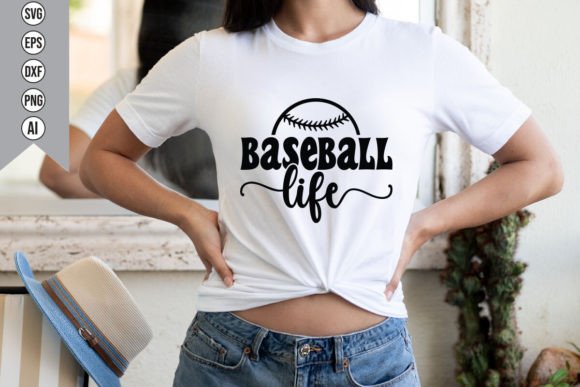
Baseball Life Embroidery Design: A Designer's Practical Review
When I first opened the Baseball Life design files, I immediately felt that familiar pull—the kind that makes you pause and mentally scroll through your stash of blank tote bags, baseball caps, and cozy sweatshirts waiting for the right project. There is something inherently warm and nostalgic about baseball-themed artwork, and this one lands with a confident simplicity that will make a lot of makers very happy. It is not overly complicated, and that is exactly what I appreciate about it.
The Baseball Life concept carries a mood that is equal parts playful and timeless. It feels like a Saturday morning at the ball field, the smell of fresh-cut grass, and the sound of a bat cracking in the distance. As someone who has reviewed hundreds of embroidery-ready graphics over the years, I have learned to spot designs that will actually translate well to fabric, and this one has the bones for it. The shape language is clean, the visual weight feels balanced, and the theme has broad appeal across ages and occasions.
What This Design Brings To The Embroidery Table
Before I ever load a file into digitizing software, I ask myself a few simple questions. Does this artwork communicate its message clearly? Will it read well at different sizes? Can I picture it stitched onto something real without losing its personality? Baseball Life checks those boxes with room to spare. The composition does not rely on tricky gradients or impossibly small details that tend to disappear under thread tension. Instead, it leans into bold shapes and a straightforward layout that gives an embroiderer room to breathe.
The fact that you get editable files—Ai, EPS, SVG, DXF, and high-resolution PNG with transparent backgrounds at 300 dpi—tells me the creator understands how real crafters and shop owners work. We do not just open a file and hit print. We tweak. We resize. We test color variations. We drop mockups into Etsy listings and hope the thumbnail stops a buyer mid-scroll. Having 100 editable and color-changeable files means you are not locked into a single aesthetic. You can shift the palette to suit a baby shower gift as naturally as a men's league team order, and that flexibility matters when you run a small business or take custom client requests.
The Mood And Market Appeal
Baseball Life sits in a sweet spot that is easy to underestimate. It appeals to parents of young players, coaches, grandparents, hobbyists, and anyone who holds a soft spot for America's pastime. But beyond that, it taps into a lifestyle niche that sells consistently. Throw pillows with this kind of graphic do well in craft fairs. A simple stitched version on a toddler raglan tee draws smiles at family gatherings. Embroidered patches find their way onto backpacks and jacket sleeves. I can already imagine a set of kitchen towels featuring this design as a Father's Day gift, wrapped in twine with a hand-stamped tag.
But here is where I get practical. If you are planning to use Baseball Life as a machine embroidery design, you need to think about the transition from vector art to stitch file. That is where many designs reveal their true nature. The bold structure here should digitize well, but I would absolutely encourage testing on scrap fabric first. Pay attention to the stitch density in areas where lines converge or details tighten. A design that looks crisp on screen can turn into a dense, puckered mess if the digitizing pushes thread counts too high in small spaces. I have learned that lesson the hard way on more than one customer order.
Where Baseball Life Shines In Real Projects
Let me walk you through a realistic scenario. Picture a small shop owner preparing for a spring boutique market. She has blank canvas totes, a stack of unisex sweatshirts, a few structured caps, and a handful of apron blanks. She wants a design that can move across multiple product types without losing impact. Baseball Life is one of those rare graphics that genuinely adapts. On a tote, it becomes a statement piece. On a cap, it feels sporty and intentional. On a pillow cover, it reads as cozy decor. That kind of versatility matters when every inch of booth space counts and every product needs to earn its keep.
When I evaluate any embroidery design for custom apparel, I think about the end user. Who is buying this? What are they celebrating? With Baseball Life, the answer is broad enough to sustain a product line but specific enough to feel personal. A grandmother buying a stitched sweatshirt for her grandson's first tee-ball season. A wife surprising her husband with a custom cap before his amateur league championship. A mom decorating the nursery with baseball-themed handmade product touches. These are the people who leave five-star reviews and come back next season.
Fabric Choices And Practical Limitations
Now, I have to be honest about where this design needs careful handling. Small hoop sizes will be your enemy if you try to cram too much detail into a patch. If the artwork contains any fine lettering or tight decorative elements, shrinking it below four inches could compromise legibility after stitching. I recommend doing a test stitch on a piece of mid-weight cotton before committing to a run of baby onesies or slim-fit tees. Textured fabrics like waffle weave, thick fleece, or loosely woven linen can distort crisp edges, so choose your stabilizer wisely. A cutaway stabilizer gives you long-term durability on garments that will face frequent washing, while a tearaway might suffice for decorative pieces like wall hangings or display pillows.
Dark fabric presents its own set of considerations. Baseball Life may rely on contrast to pop, and what looks vibrant on a white mockup can flatten out on heather gray or navy. Test your thread colors on both light and dark backgrounds before finalizing your product photography. I have seen beautiful designs lose half their charm because nobody checked how the thread tension and color saturation behaved on a black sweatshirt. Curved surfaces like caps and hat fronts are another checkpoint. The center seam on a structured baseball cap can interfere with alignment, so take extra care positioning the design and consider using a cap-specific hoop if your machine supports one.
Thinking About The Customer Experience
What I find most valuable about Baseball Life is how it strengthens brand consistency for small creative businesses. When a customer browses an Etsy shop or scrolls through Instagram, they are subconsciously looking for cohesion. A well-chosen design that repeats across tote bags, sweatshirts, and patches signals professionalism. It tells the buyer that the maker understands their audience. This design has enough personality to be recognizable without being so niche that it limits you. Pair it with clean product photography using the included high-quality mockups, and you have the foundation of a trustworthy listing.
For digital product sellers, the asset pack is generous. Having editable vectors alongside print-ready PNG files and layered mockups means you can package a cohesive bundle for your own customers. But here is my gentle reminder: always confirm the licensing terms before reselling finished items or distributing the files in any form. Just because a file is editable does not automatically grant commercial embroidery rights. Most creators spell this out clearly, but it is worth double-checking before you print labels or launch a product line built around a single design.
Digitizing Notes Worth Mentioning
If you are sending Baseball Life to a digitizer or handling the conversion yourself, give them clean artwork and clear instructions. Point out any areas where you want satin stitch for a smooth border or fill stitch for solid coverage. Discuss whether running stitch details would add texture or become lost in the overall composition. I tend to prefer a balanced approach: satin borders for definition, fill stitches for larger colored areas, and minimal running stitches for subtle accents. But every project is different, and your fabric choice will guide those decisions more than any rule of thumb.
The stitch density conversation matters a lot here. Overly dense stitching on a lightweight t-shirt can create a stiff, uncomfortable patch that customers will not enjoy wearing. Under-digitized sections can expose the fabric underneath and make the design look unfinished. Test on a piece of scrap fabric from your actual product line, wash it once, and observe how the thread settles. That single step has saved me from more embarrassing customer service emails than I can count.
Mockup Strategy And Product Presentation
The inclusion of JPG files with high-quality mockups and transparent backgrounds is a practical bonus I do not take lightly. When I prepare a listing, I spend almost as much time on the preview images as I do on the product itself. A clean mockup helps the buyer visualize the finished embroidery, even if they have never purchased a stitched item before. With Baseball Life, I would showcase it on a natural linen tote, a heathered sweatshirt, and a structured cap to highlight its range. The transparent PNGs allow you to overlay the design onto your own product photos without messy background removal, which keeps your branding polished.
For craft business owners who sell at in-person markets, printed mockups taped to the front of a display bin can boost engagement significantly. Customers like to see what is possible. A well-presented printable mockup of Baseball Life stitched onto a canvas pouch or a baby embroidery onesie can start conversations and lead to custom orders on the spot.
Final Thoughts Before You Stitch
I have tested enough designs to know that not every graphic with a charming preview holds up under the needle. Baseball Life has the right ingredients: a clean composition, a universally loved theme, editable source files, and solid visual presence. It is the kind of artwork I would confidently recommend to a fellow Etsy seller, a small shop product line, or a maker looking to expand into personalized gift territory.
Take the time to test it. Experiment with hoop size, thread brand, and fabric texture. Let the design breathe on the garment rather than maxing out the stitchable area. Pay attention to how it interacts with fabric grain and what happens after the first wash. Those small investments of effort separate professional results from hobby-level experiments. For anyone building a product collection around lifestyle themes, Baseball Life earns its place on the shortlist.